To the average visitor, Nam Dinh Province often goes unnoticed. Nestled in the Red River Delta, this region is renowned for its fertile farmlands and striking churches. It is also the birthplace of Tran Hung Dao, the legendary 13th-century national hero who led the resistance against Mongol invaders. However, Nam Dinh’s most notable gift to Vietnam is undoubtedly its signature beef noodle soup — phở bò.
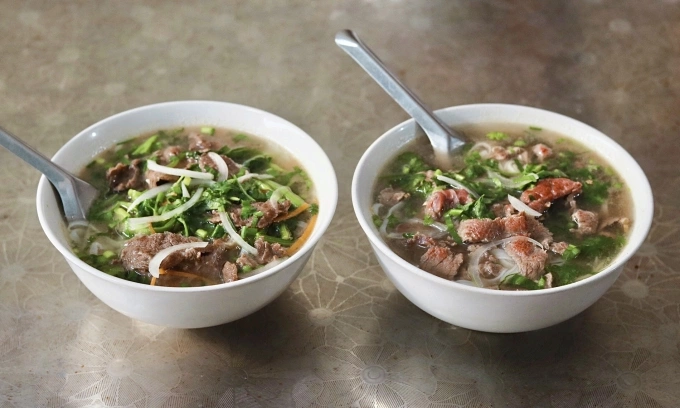
As with many elements of Vietnamese history, the origins of phở are intertwined with legends and interpretations. This is especially true of phở, Vietnam’s most iconic dish and its most internationally recognized culinary export. In Hanoi, phở is a staple of the morning routine. From early dawn, sidewalk vendors set up their stalls, filling the air with aromatic steam. Cooks prepare each bowl to order, pouring steaming broth over tender rice noodles and thin slices of beef, finishing it off with freshly chopped herbs and scallions. Diners then tailor their bowls to taste, adding splashes of lime juice, slices of red chili, basil sprigs, and touches of hoisin sauce. It’s an essential experience for anyone visiting Vietnam.
Though Nam Dinh is believed to be the birthplace of phở, few would argue that its spiritual home is not Hanoi. It was the capital’s unique blend of historical and cultural elements that helped propel phở to national prominence.
The story of phở traces back to the late 19th century, during the height of French colonial rule. The French appetite for beef led to increased availability of the meat in Vietnam, leaving behind an abundance of beef bones. Vietnamese and Chinese cooks in Nam Dinh used these bones to develop a richer, more flavorful broth. Over time, the dish made its way to Hanoi, evolving from an earlier noodle soup known as xáo trâu — made with buffalo meat and rice vermicelli — into the refined and harmonious phở we know today. Buffalo meat gave way to beef, flat rice noodles were introduced, and the broth was perfected into the delicate balance of flavors that define Hanoi-style phở.
Migrant workers from China’s Yunnan and Guangdong provinces embraced this new version for its resemblance to their native dishes. Vietnamese locals, too, had developed a growing fondness for beef and quickly adopted phở into their daily diet. By the 1930s, gánh phở — mobile kitchens carried on bamboo poles — became a familiar sight throughout Hanoi’s Old Quarter. Phở soon became deeply embedded in Vietnamese culture. In his poem “An Ode to Pho,” poet Tú Mỡ praised both the soup’s subtle flavor and its democratic appeal — a dish beloved by both the wealthy and the working class.
Like Vietnam itself, phở has experienced significant transformations. During difficult periods, simpler versions of the soup were sold on the streets. A major shift occurred after the country was divided in 1954 and millions of northerners migrated south. In the south’s more bountiful setting, chefs began to sweeten the broth and incorporate a wider variety of herbs and condiments, including hoisin sauce and chili sauce. This divergence gave rise to an ongoing debate. The key distinction lies in the southern style’s generous garnishes and sweeter profile. While phở purists favor the minimalist Hanoi version, both styles offer a delicious and unique take on the dish.
Despite the ongoing debate about where to find Vietnam’s best phở, the dish itself has remained surprisingly consistent over the decades. While diners today can choose from a wider range of beef cuts — such as rare beef (tái), flank (nạm), brisket (gầu), tripe (sách), tendon (gân), and meatballs (bò viên) — the foundational elements remain unchanged. The creation of chicken phở (phở gà) in 1939 stirred some controversy, but the dish has since become a popular variation. Still, the essence of phở has largely remained intact. That said, it continues to evolve. Young Vietnamese chefs are now experimenting with brown rice noodles and fresh phở rolls. In 2018, Anan Saigon made headlines with a $100 bowl of phở featuring truffle oil, wagyu beef, and foie gras. Internationally, chefs have added even more unconventional ingredients, from crawfish to sous-vide beef.
Today, a traditional phở broth is made using beef bones, oxtail, flank steak, charred onions and ginger, and a rich blend of spices — star anise, cinnamon, cloves, black cardamom, and coriander. Chicken phở is equally beloved as a lighter alternative. In the north, the garnishes are minimal — a few herbs, lemon slices, and chili — while in the south, the broth tends to be sweeter and diners enjoy a wider array of options. In Central Vietnam, it’s not unusual to encounter phở served with a poached egg.
As one of the world’s most celebrated noodle soups, phở has rightfully earned its status as a culinary classic.


.jpg)
