Local Unpacked: One-of-a-Kind Cuisine of Ha Giang Karst Plateau
Some dishes become so iconic that they transcend borders and bring global recognition to the countries they originate from. Vietnam is no exception. Renowned around the world, Vietnamese street foods such as phở, bánh mì, bánh xèo (crispy pancakes), and bánh cuốn (steamed rice rolls) have delighted palates far beyond Southeast Asia. These beloved dishes not only showcase culinary excellence but also tell stories of culture, tradition, and ingenuity.
Across Vietnam, each region boasts its own unique delicacies, reflecting local customs and ingredients. These regional specialties act as cultural ambassadors, offering a deeper understanding of their homeland. The cuisine of Ha Giang’s majestic karst plateau is a prime example—distinct, rich in heritage, and unforgettable in both taste and origin.
A Culinary Landscape as Diverse as the Terrain
Ha Giang is widely celebrated for its dramatic mountain scenery, golden terraced fields during harvest season, romantic buckwheat flower valleys, and rich ethnic diversity. But it is also a treasure trove of culinary gems. With 19 different ethnic groups living in the province, Ha Giang’s cuisine represents a mosaic of cultures and flavors.
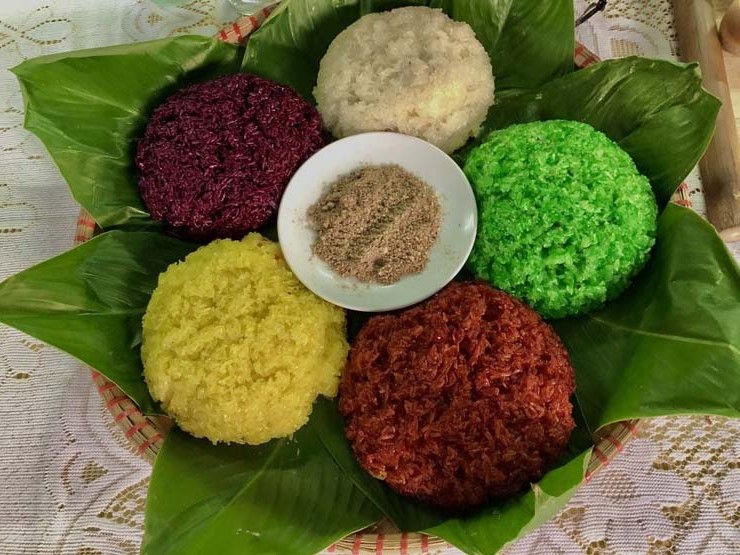
Specialties such as five-color sticky rice, buckwheat cake, grilled moss, corn wine fermented with forest leaves, hunchback chung cake, local sausages, and thắng cố are deeply rooted in centuries-old traditions and the day-to-day lives of local people. These dishes often feature ingredients native to the region, such as mắc khén (wild pepper), hạt dổi, cardamom, star anise, and forest honey—seasonings that give the food its characteristic earthy and aromatic taste.
Five-Color Sticky Rice – A Symbolic Feast
Prepared during festivals and special occasions, this vibrant dish is not only a feast for the palate but also a visual representation of Vietnamese cosmology. The five natural colors—red, yellow, green, black, and white—are derived from plant-based dyes and symbolize the five elements: fire, earth, wood, water, and metal. This sticky rice dish is an essential part of spiritual and cultural life in the northern highlands.
Buckwheat Cake – A Taste of the Flowering Highlands
A staple among the ethnic minorities in Ha Giang, buckwheat cakes are made from the seeds of the buckwheat flower, a symbolic bloom of the region. The seeds are ground into fine flour, mixed with water, molded, and steamed or grilled. The result is a subtly nutty, slightly chewy cake that’s unlike any other. Today, buckwheat is used in a variety of local products, including noodles, rice vermicelli, wine, and even beer.
Hunchback Chung Cake – A Festive Red Dao Specialty
This distinct version of bánh chưng, a traditional Vietnamese rice cake, is particularly associated with the Red Dao people. It’s named for its unique shape, which resembles a hunchback. Wrapped in aromatic galangal leaves, the cake contains upland sticky rice, green beans, and locally raised black pork. It is boiled over a wood fire for up to 10 hours. With its rich flavor and festive significance, this cake is a cherished culinary highlight during the Lunar New Year and other cultural celebrations.
Au Tau Porridge – Nutritious Comfort in Cold Weather
This hearty porridge combines the rich, slightly bitter flavor of au tau (a native tuber) with creamy chicken egg and aromatic herbs. The tuber is toxic if not prepared properly, so locals soak it in rice water and cook it for hours until it becomes edible. It is then blended into a bone broth base with yellow sticky rice. Served hot with ground meat, salt, pepper, and green onions, it’s a traditional winter comfort food believed to relieve aches, fatigue, and the chill of the highlands.
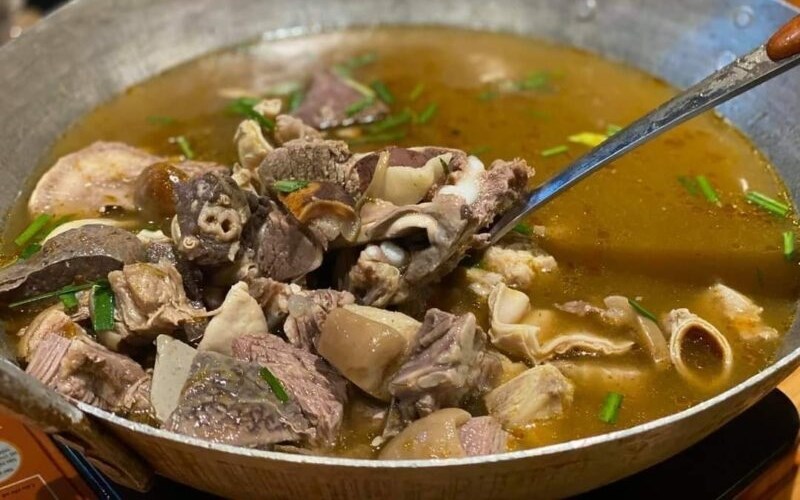
Thang Co – A Dish with Deep Roots
Thắng cố, literally "meat soup," is a time-honored dish of the Hmong people. Traditionally made from horse meat, it now also features buffalo, beef, or pork to appeal to a broader audience. The essence of thắng cố lies in its rich broth, simmered with bones, organs, and a blend of 12 spices like cardamom, star anise, and lemongrass. The meat is stir-fried before being added to the broth and slow-cooked until tender. Thắng cố is often paired with mèn mén (steamed cornmeal), grilled corn cakes, and the region’s potent corn wine.
More Than Food: A Cultural Journey
Each dish in Ha Giang is more than a meal—it’s a story of resilience, tradition, and nature’s bounty. These foods have developed over generations through the ingenuity of ethnic minorities adapting to the mountainous terrain and harsh climate. Whether you're savoring a steaming bowl of au tau porridge or sharing thắng cố around a fire, every bite offers a deeper connection to the land and its people.
For travelers seeking authenticity, exploring the cuisine of Ha Giang is as essential as witnessing its epic landscapes. So the next time you find yourself wandering the winding mountain roads of Vietnam’s far north, don’t just admire the view—taste it.


.jpg)
